

Honoring Charlie Kirk
And condemning political violence. A speech given at a Charlie Kirk memorial

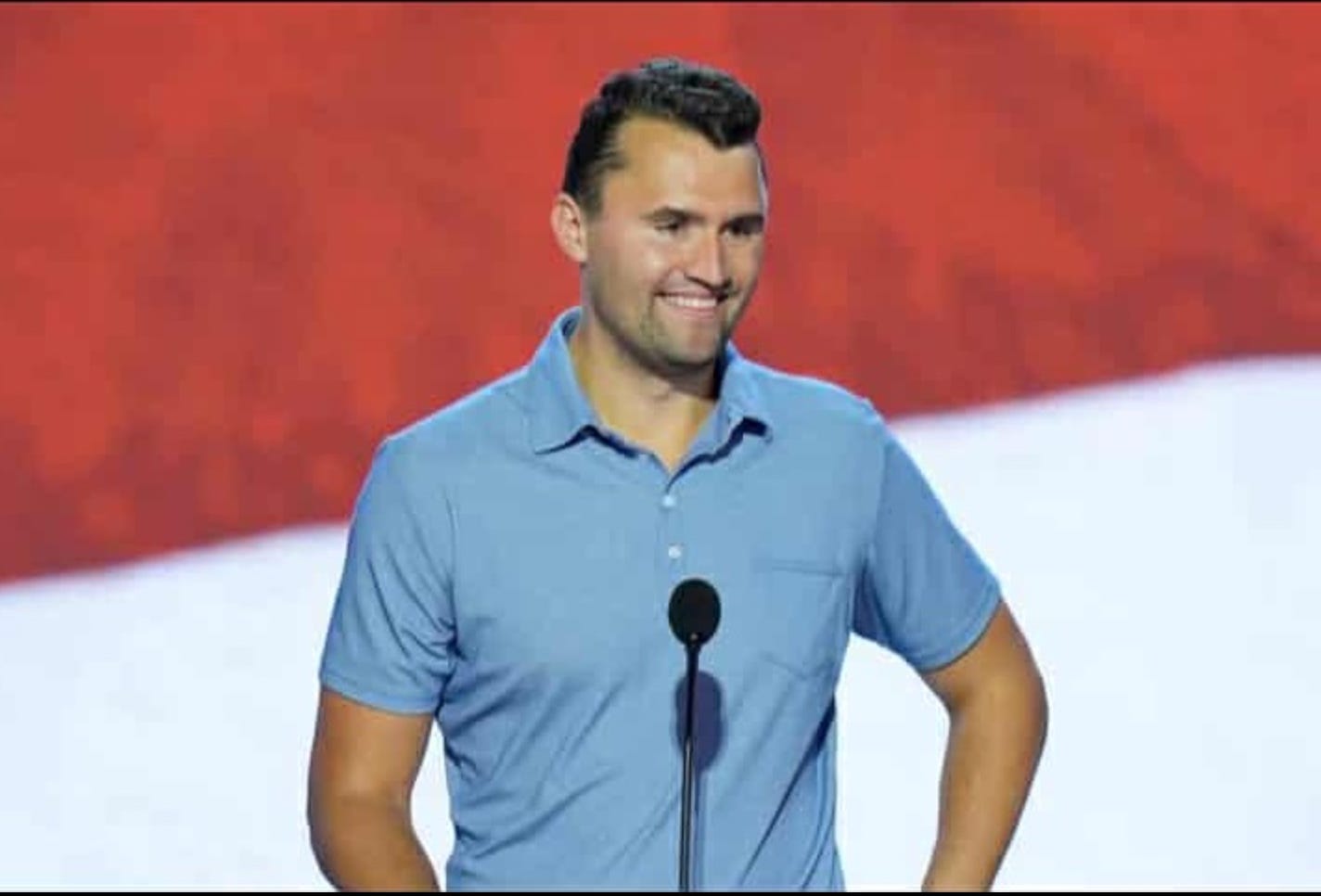
Thank you for coming to this memorial for Charlie Kirk. My name is Pete Anderson, and I have absolutely no qualifications for hosting this, other than that I appreciate Charlie’s message, and that I’m saddened by his death. I never met Charlie. And whether you liked him or not, his assassination is a terrible event for America, in fact, the worst political assassination since that of MLK, Jr.
Charlie, to me, represented the soul of our Republic and our democracy. I don’t say that because of his beliefs, though I largely share them. I say that because of his willingness to talk to his political opponents. Charlie would talk to anybody, about anything. No one else can touch his reputation for honest, respectful debate. No one else even comes to mind. Debate, and persuasion, are the basis of democracy. We can either try and persuade each other, or it’s just about power— political maneuvering, demographic changes, voter manipulation, censorship, bullying, or even civil war.
But by talking, and sharing our points of view, we might change minds without shedding blood. Discussion is the alternative to violence. No matter how uncomfortable talking can be, fighting is a lot worse.
We’ve lost a lot when it comes to political debate in this country. I grew up in Abraham Lincoln country: rural central Illinois. The original Lincoln family homestead is a couple of miles from my cousin’s farm, maybe twenty miles from my family’s. I lived near a tiny town called Bement. There’s a small house, now a state park, there where Lincoln and Stephen A. Douglas met and agreed to a series of debates in their run for the US Senate in 1858. The key issue in that campaign was slavery.
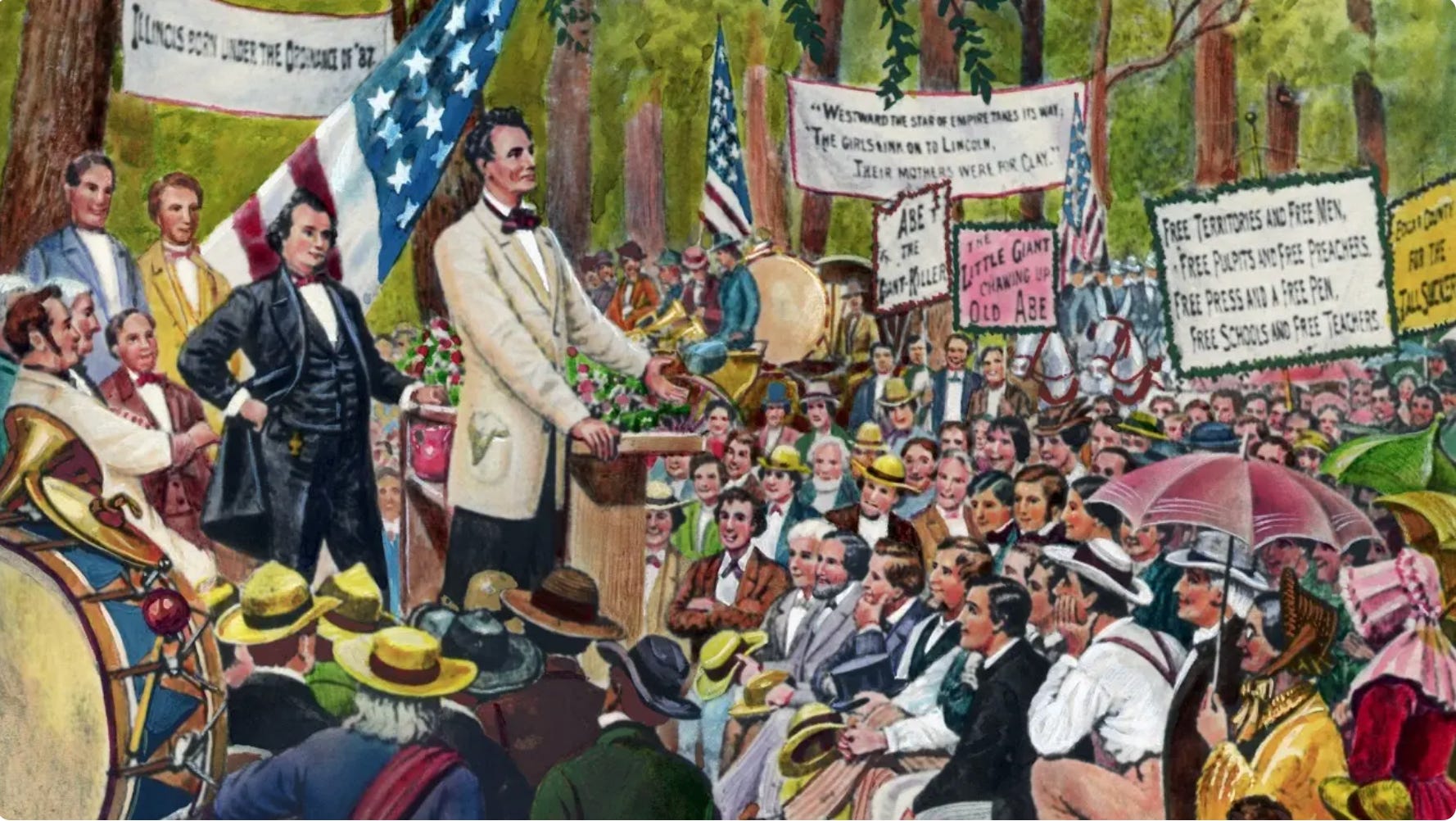
Lincoln and Douglas debated in small towns all over Illinois that year. Their debates attracted hundreds of people and lasted three hours. The audiences weren’t a bunch of college professors either. These were farmers, blacksmiths, and store clerks: regular people. Audiences were gripped; the debates were intense. Contrast that with our recent Presidential debates. Charlie Kirk was a throwback to Lincoln and Douglas. More than anybody, he tried to bring back that kind of discussion of the issues.
Since Charlie’s death, it hasn’t been hard to find examples of his ability to respectfully disagree and to treat people with compassion. I’d like to read one I particularly liked, from writer Michael Easter:
A few years ago, I got a message from Charlie Kirk. He wanted me to come on his podcast.
All I knew about him then was that he was a right-wing political commentator.
I don’t publicly discuss politics because my books cover health and the human experience, which is universal.
So I asked my book’s publicist, who is extremely progressive, if I should go on.
“Do it,” she said. “If politics comes up, steer it back to health.”
Charlie didn’t ask me a single question about politics. He was exceptionally kind and genuinely curious about my work. He had a better reading of my book than nearly any other interviewer I’d encountered and brought up faith-based parallels that I hadn’t considered. That helped me understand my work better. He asked questions so his audience could become better versions of themselves. He mentioned the title of my book far more than he had to.
I’ve been on big podcasts hosted by meditation and self-help gurus who weren’t a fraction as present, kind, and curious as Charlie Kirk.
I respect Charlie as a curious thinker and fellow human. I respect his devotion to his faith and family. His willingness to show up and talk to anyone was inspiring, unique, and beneficial. I’m sad he’s gone.
Charlie’s ability to focus compassion on other people speaks to what kind of person he was: a rare kind of person. An inspiring kind of person. He has inspired me to speak out and do it with respect.
So, today, I want to especially thank those of you who showed up who didn’t agree with Charlie. You may not share his views, but you share his best qualities. You are showing your principles and your open minds.
You don’t have to agree with a single one of Charlie’s positions to know how terrible political assassination is. If the worst politician in America, in your judgment or mine, were assassinated, it would be a terrible tragedy. Not just on a human level, because murder is just wrong, but because of its inevitable effect. Murder multiplies. Violence takes on a life of its own. Either people on the victim’s side seek revenge or people on the murderer’s side taste blood and want more. It really doesn’t matter who does it. It starts a horrible cascade, in places from Northern Ireland to Beirut.
Italy’s Years of Lead from the 60s into the 80s are just one example. There were assassinations, kidnappings, bombings, and massacres. A former prime minister was kidnapped and murdered. A train station was bombed, killing 85, the worst massacre since World War II. All told, 1200 people were killed.
There are many, many more examples of this kind of political violence. No matter what your goals, nothing is worth that. We don’t want that here.
For those of you who, like myself, mostly agree with Charlie, I challenge you to pray for the safety and well-being of those public figures you disagree with, and if anything awful, God forbid, should happen to them, to attend their memorials as well. Because, when we honor those with whom we disagree, it is not just the individual we honor, but our country, our American ideals, our Republic , and our democratic tradition of hashing things out together.
God Bless us all.
Thanks for sharing this.
https://open.substack.com/pub/sergemil/p/democrats-and-freedom-truth-or-illusion